
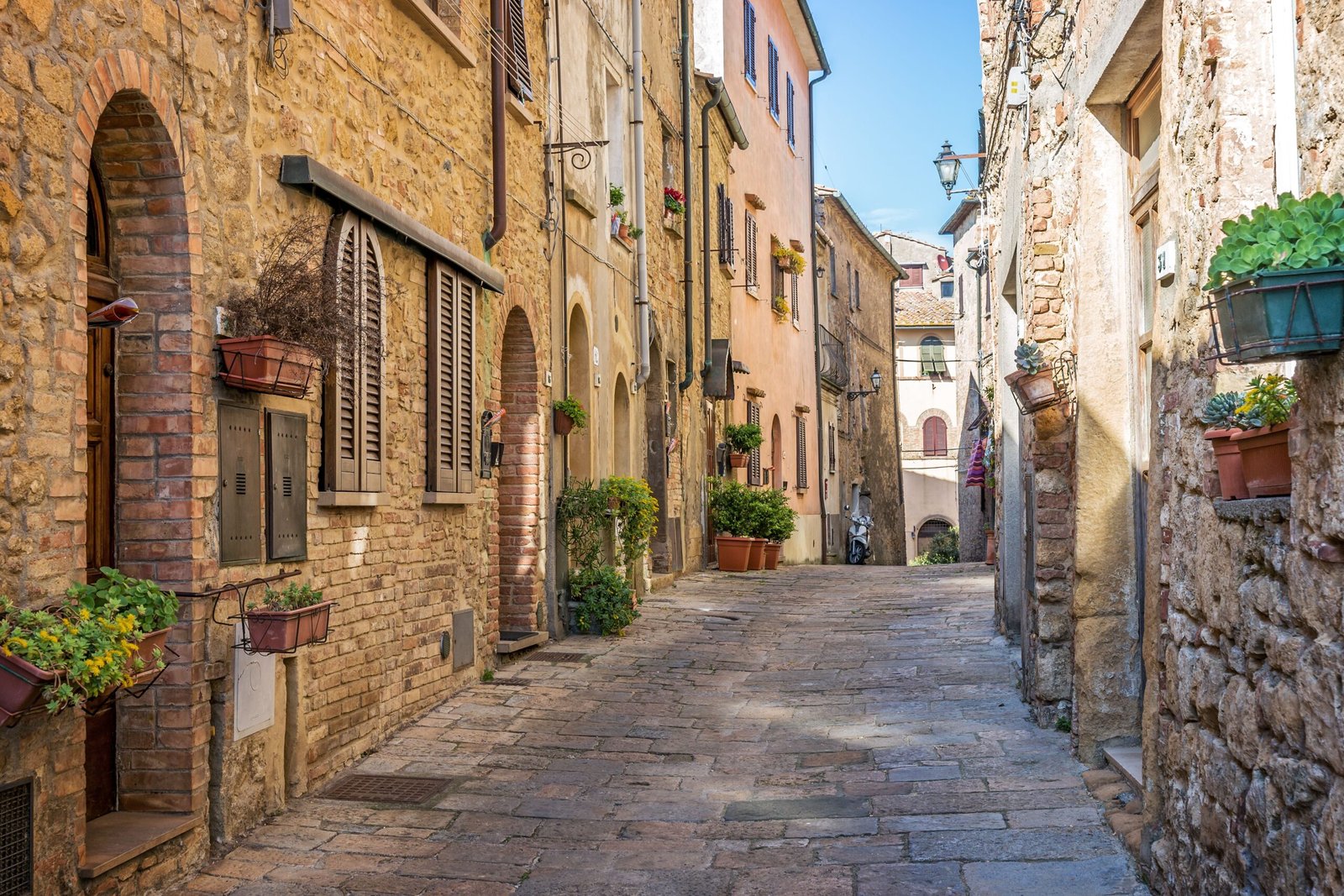
Top 10 Hidden Gems in Tuscany You Won’t Find in Guidebooks
If you’ve ever dreamed of Tuscany, chances are your imagination has already visited Florence’s Renaissance masterpieces, Pisa’s tilting tower, and Siena’s sun-baked piazza. These places earn their fame for good reason — but they also come with crowds, long lines, and a version of Tuscany that can feel more like a movie set than a living, breathing region.
The good news? You don’t have to fight the crowds to fall in love with Tuscany. Just beyond the well-trodden path lies a quieter, more intimate version of this beloved Italian region — one filled with medieval hill towns, hidden waterfalls, family-run wineries, and villages where locals still outnumber tourists.
This guide is for the curious traveler and first-time visitor alike. You don’t need to be a seasoned Italy expert to enjoy these spots — you just need a sense of adventure, a rental car (or a little patience with regional trains and buses), and an appetite for discovery. Let’s explore ten of Tuscany’s best-kept secrets.
1. Sorano — The “Little Matera” of Tuscany
Tucked into the volcanic tufa cliffs of southern Tuscany’s Maremma region, Sorano feels like stepping into a fairy tale carved from stone. Often nicknamed the “Matera of Tuscany” for its cave dwellings and rock-hewn passageways, this medieval village dates back to Etruscan times and later flourished under the powerful Orsini family.
Wander through narrow alleyways that seem to grow directly out of the rock, and you’ll stumble upon the Rocca Orsini fortress, which offers sweeping views over the Lente River valley. History buffs will love the nearby Etruscan necropolis, complete with tombs carved directly into the cliffside. For beginners just discovering Tuscany’s Etruscan roots, Sorano is a wonderfully approachable introduction — informative without being overwhelming.
Good to know: Sorano pairs beautifully with a day trip to nearby Pitigliano and Sovana, two equally stunning tufa towns just a short drive away. Together, they form what locals call the “Tufa Towns,” connected by ancient sunken roads called vie cave that the Etruscans carved through solid rock thousands of years ago.
2. Montemerano — A Storybook Village in the Maremma
If you want to see what a “typical” Tuscan hill town looked like before Instagram discovered it, head to Montemerano. This walled village in the Maremma countryside has flower boxes on every windowsill, a charming central piazza, and a beautifully preserved medieval church, the Chiesa di San Giorgio, which houses Sienese Renaissance artwork that would draw crowds if it were in Florence.
What makes Montemerano special is its rhythm. There’s no rush here. Locals gather at the same café tables every morning, and shopkeepers know their regulars by name. It’s an ideal stop for travelers who want to slow down and simply be in Tuscany rather than checking sights off a list.
Good to know: Just outside the village, you’ll find the Terme di Saturnia, natural hot springs with cascading limestone pools that are free to visit and open year-round — a perfect reward after a day of exploring.
3. Barga — Tuscany’s Best-Kept Mountain Secret
Most visitors focus on central and southern Tuscany, leaving the mountainous Garfagnana region in the north refreshingly untouched by mass tourism. Barga, often cited as one of Italy’s most beautiful villages, sits perched above the Serchio Valley with the jagged peaks of the Apuan Alps as a backdrop.
The town has a surprising claim to fame: a strong historical connection to Scotland, thanks to generations of Barga residents who emigrated there in the 19th and 20th centuries. This unusual blend of Tuscan and Scottish heritage gives Barga a unique cultural flavor you won’t find anywhere else in the region.
Climb to the Duomo di Barga for one of the finest panoramic views in all of Tuscany, and if you’re visiting in summer, try to catch Barga Jazz, a beloved annual festival that fills the cobblestone streets with music.
Good to know: Don’t leave without trying biroldo, a traditional local blood sausage — it’s a distinctly regional specialty you won’t find on menus further south.
4. Vinci — Beyond the Birthplace of Leonardo
Everyone knows the name Leonardo da Vinci, but surprisingly few tourists make it to his actual hometown. Vinci sits in a quiet corner of Tuscany between Florence and Pisa, and its relative inaccessibility by public transport (you’ll need a train to Empoli followed by a local bus, or simply drive) has kept it wonderfully uncrowded.
The Museo Leonardiano showcases wooden models built from Leonardo’s own sketches and notebooks, offering a hands-on, family-friendly way to understand his inventions. For an even more moving experience, walk (or drive) three kilometers to Anchiano, the tiny hamlet where Leonardo was actually born. The farmhouse, Casa Natale di Leonardo da Vinci, sits surrounded by olive groves and feels remarkably personal compared to the grander museums of Florence.
Good to know: The walk from Vinci to Anchiano follows a scenic path through olive groves and takes about 45 minutes — a lovely way to connect with the landscape that shaped one of history’s greatest minds.
5. Lucignano — The Spiral Town
Most Tuscan hill towns follow a fairly standard layout, but Lucignano, in the Val di Chiana near Arezzo, breaks the mold entirely. The town is built in a series of concentric elliptical rings, giving it an almost labyrinthine charm as you walk its curving streets.
Inside the Museo Comunale, you’ll find the “Golden Tree” (Albero d’Oro), an extraordinary 14th-century gold reliquary considered one of the finest examples of Sienese goldsmith work in existence. Despite its beauty and historical significance, Lucignano rarely appears on standard Tuscany itineraries, which means you can often explore the museum in near-total silence.
Good to know: Visit during the biennial Maggiolata festival (held in odd-numbered years in May), when the town is decorated with elaborate flower displays and locals compete in friendly rivalries between neighborhoods.
6. Monteriggioni — A Perfectly Preserved Medieval Fortress
Even Dante mentioned Monteriggioni in The Divine Comedy, comparing its ring of towers to giants standing guard. Despite this literary pedigree, this small walled town between Siena and San Gimignano remains far less visited than its famous neighbors.
Because Monteriggioni is compact, it’s ideal for beginners who feel intimidated by larger Tuscan cities. You can comfortably explore the entire walled town, walk sections of its ancient ramparts, and visit its tranquil central piazza in just a couple of hours — making it a perfect half-day addition to a Siena or San Gimignano itinerary.
Good to know: Stop by the Fattoria Castello di Monteriggioni winery just outside the walls for a relaxed wine tasting with views back toward the fortress town.
7. Lari — A Terracotta Village with Serious Foodie Credentials
Perched on a hilltop in the Pisan countryside, Lari is easy to overlook — which is exactly why it’s worth visiting. The village is known for its distinctive terracotta-colored buildings and a striking medieval castle, the Castello dei Vicari, which offers commanding views that stretch (on a clear day) all the way to the Leaning Tower of Pisa in the distance.
Lari has quietly built a reputation among Italian food lovers as a center for traditional pork butchery, particularly prosciutto and other cured meats made using time-honored family recipes. If you’re interested in Tuscan cuisine beyond the usual pasta and wine, this is a wonderful place to taste something more specialized.
Good to know: Time your visit for late summer if possible — Lari hosts a prosciutto festival that celebrates its culinary heritage with tastings throughout the historic center.
8. Casale Marittimo — Hilltop Views Over the Etruscan Coast
While the Tuscan coastline near Livorno and the Etruscan Coast gets some attention, the small hill towns just inland remain largely undiscovered by international visitors. Casale Marittimo is one of the loveliest, sitting on a ridge with panoramic views stretching all the way to the Mediterranean Sea.
The village itself is tiny — you can walk its entire historic center in under thirty minutes — but its charm lies in the surrounding landscape: vineyards, olive groves, and coastal views that rival the more famous vistas of the Val d’Orcia, without the crowds or the price tag.
Good to know: This area is emerging as a favorite for wine tourism, with several small, family-run vineyards happy to welcome walk-in visitors for tastings — a more relaxed alternative to the larger, appointment-only estates near Montalcino.
9. Castiglione di Garfagnana — For Nature Lovers and Hikers
If your idea of a great Tuscan getaway involves hiking boots rather than museum tickets, head to Castiglione di Garfagnana in the mountainous north. This walled medieval village serves as a gateway to some of Tuscany’s most dramatic natural landscapes, far removed from the gentle rolling hills most people picture.
Nearby, adventurous travelers can explore the Apuan Alps, home to the Antro del Corchia, one of Italy’s largest cave systems, featuring underground fossil lakes and dramatic stalactite formations. For a gentler outing, the trails of the Foreste Casentinesi National Park lead to the stunning Acquacheta Waterfall, a moderately challenging hike that rewards you with one of the region’s most beautiful natural sights.
Good to know: This part of Tuscany is noticeably cooler than the central and southern regions, making it an excellent summer escape when the Val d’Orcia and Chianti are baking in the heat.
10. San Quirico d’Orcia — The Overlooked Gem of the Val d’Orcia
The Val d’Orcia is one of Tuscany’s most photographed regions, but most visitors funnel straight to Pienza and Montalcino, leaving San Quirico d’Orcia comparatively peaceful. This is a shame, because the town offers all the same UNESCO-listed rolling hills and cypress-lined roads, plus a genuinely charming historic center that rarely feels crowded.
Don’t miss the Horti Leonini, a beautifully manicured Renaissance garden right in the heart of town that’s completely free to visit. The Collegiata church, with its ornate Romanesque doorways, is another highlight that most guidebooks barely mention in favor of Pienza’s more famous cathedral.
Good to know: San Quirico makes an excellent home base for exploring the entire Val d’Orcia — it’s centrally located, has plenty of affordable accommodation, and puts you within a short drive of Pienza, Montalcino, and the iconic cypress-lined roads you’ve probably seen in countless Tuscany photos.
Tips for Exploring Tuscany’s Hidden Gems
Before you set off, a few practical notes for first-time visitors:
- Rent a car if you can. Many of these towns have limited or no public transportation, and having your own vehicle gives you the freedom to wander at your own pace.
- Visit in shoulder season. April–May and September–October offer pleasant weather without the peak summer crowds (even in hidden spots, August can get surprisingly busy with Italian domestic tourists).
- Learn a few Italian phrases. In smaller villages, English is less commonly spoken than in Florence or Rome, but locals are almost always warm and patient with visitors who make an effort.
- Slow down. The whole point of visiting these lesser-known towns is to experience a different pace of travel. Resist the urge to rush from one to the next — pick two or three per day at most.
- Ask locals for recommendations. Some of the best discoveries in Tuscany come from a conversation with a shopkeeper or innkeeper rather than any guidebook.
Final Thoughts
Tuscany’s fame is well-earned, but its true magic often lives just beyond the postcards. These ten hidden gems offer something the bigger cities can’t: quiet piazzas, genuine local encounters, and the sense that you’ve discovered something special all on your own. Whether you’re drawn to Sorano’s ancient rock-cut passageways, Barga’s unexpected Scottish heritage, or the peaceful gardens of San Quirico d’Orcia, each of these places proves that the best of Tuscany isn’t always found in the guidebooks — sometimes it’s found by simply taking the road less traveled.
So pack your curiosity, plan a little extra time, and get ready to fall in love with a side of Tuscany that most travelers never see.